Writing Weather, Light and Season Without Purple Prose
The sky can tell readers the hour, the season and the mood, if you describe it exactly. How to write weather and light in long-form without ornament.
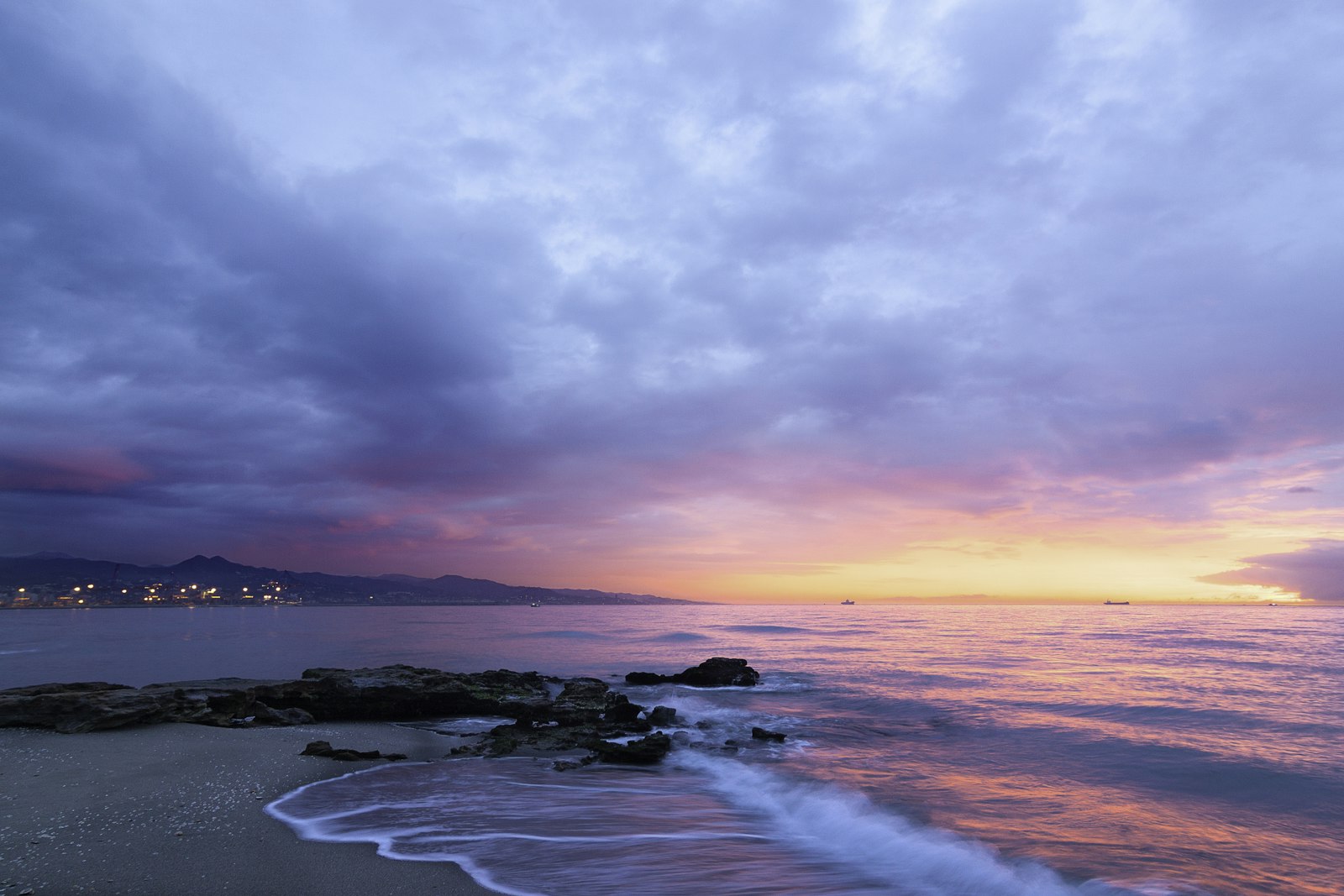
Most writers know the feeling of reaching a sentence about the sky and stalling. The light was golden. The clouds were dramatic. The air was crisp. None of these is wrong, and none of them tells the reader anything they could not have guessed. Weather and light are where long-form writing most often slides into decoration, and also where it can quietly do some of its best work.
Used well, the sky is not scenery. It tells the reader what time it is, what season they are in, how long they have been travelling with you and, often, how they should feel about what comes next. Here is how we approach writing it precisely, without the ornament.
Why the sky goes purple
Purple prose about weather usually comes from one of two places. The first is borrowed language: adjectives we have read so often that they arrive before we have looked. Golden hour, leaden skies, a blanket of snow. They feel safe because they are familiar, and they are invisible for the same reason.
The second is reaching for effect. The writer senses that a moment matters and piles on description to prove it: three adjectives, a metaphor, a second metaphor in case the first one missed. The reader feels the effort rather than the moment.
Both have the same cure, which is to describe what was actually there, in the order you noticed it, in plain words. The precise detail almost always carries more feeling than the impressive one.
Look for what is specific
A useful test for any sentence about weather is whether it could describe a different day. "It was a cold, grey morning" could be almost any morning in half the world's winters. "The frost had stayed on the north side of every wall" belongs to one morning, and it tells the reader the temperature, the time of day and the angle of the sun without naming any of them.
Some places to look when your notes say only "nice light" or "bad weather":
- Direction. Where is the light coming from, and what does it fall on? Low light from the side shows texture; overhead light flattens it.
- Edges. Are shadows sharp or soft? Is the horizon a clean line or lost in haze?
- Effects on things. Wet stone darker than dry. Washing taken in early. Windows lit in the middle of the afternoon.
- Effects on people. How they walk, what they wear, where they choose to stand.
- Sound and smell. Rain is often heard before it is seen; heat has a smell on tarmac and on dry grass.
You do not need all of these. One exact detail, placed well, does more than five general ones. If you keep notes in the field, this is the moment to write the specific version down, while it is still in front of you. We go into building that habit in From Field Notes to a Finished Story.
Weather as a clock
In a long piece, readers can lose track of time. A narrative that spans a week, a season or several years needs markers, and the sky is one of the most natural ones available. It saves you from writing "three days later" every few paragraphs.
Light tells the hour. The long blue stretch after sunset, the sharp short shadows at noon, the grey that comes before dawn: each places the reader in the day without a timestamp. Season works the same way on a larger scale. Leaves on the ground, the first evening a coat was needed, the week the evenings grew noticeably longer. These small observations let a reader feel time passing rather than be told about it.
If your piece covers a long stretch, try noting in the margin of your draft the time of day and the season for each section. Gaps and contradictions show up quickly: a scene that seems to be both autumn and spring, or a day in which the light never changes. Fixing them often makes the whole piece feel more solid, even to readers who could not say why.
Carrying mood without announcing it
The oldest trick with weather is to make it match the feeling: rain for grief, sunshine for joy. Readers recognise it at once, and it tends to feel staged. The sky ends up doing the emotional work that the writing should have done.
Two quieter approaches tend to work better. The first is to let the weather simply be there, accurately, and trust the reader to make the connection. A difficult conversation held on a bright, ordinary afternoon can be more affecting than the same conversation in a storm, because the world is visibly carrying on.
The second is contrast. A cheerful scene under a heavy sky, or a moment of loss on the first warm day of the year, creates a small tension that the reader feels without being told. It also tends to be closer to how life actually happens, which is part of why it convinces.
Whichever you choose, keep the description short at moments of high feeling. A single plain sentence about the light, placed just before or just after the important line, gives the reader somewhere to rest. It works much like a paragraph break, which we discuss in Pacing and White Space.
Revising your skies
When the draft is finished, it is worth one pass that looks only at weather, light and season. A few questions to ask on that pass:
- Does each description tell the reader something: the time, the place, a change, a mood? If it only decorates, cut it or replace it with something you noticed.
- Are any phrases borrowed? Search your draft for the usual suspects and see whether a plainer, more exact version exists.
- Is the timeline of light and season consistent from section to section?
- Does every opening describe the sky? Many drafts begin each section with weather out of habit. Keep it where it earns its place.
- Is any single description longer than the moment deserves? Two sentences are usually enough; one is often better.
Reading the piece aloud helps here too. Overwritten sky sentences tend to be the ones you hurry through, slightly embarrassed.
A wide page for a wide sky
Long-form writing has room that shorter formats lack, and the sky is one of the things that room is for. A single paragraph of exact, unhurried description, held at the right point, can change how an entire piece feels. FullySky's pages are built for that kind of reading, with wide covers and an unhurried layout (the features page has the details), so a well-placed passage of description has space to land.
The aim is not to write beautifully about weather. It is to write accurately, and let the accuracy do the rest. Look up before you write, note what is there, and give the reader the one detail that makes the day unmistakable.



Comments 0
Oldest first. Comments are reviewed before they appear.
No comments yet. Be the first to respond.